






Imagine it’s a beautiful spring day during spring testing season. Your students sit quietly, eyes focused on their assessments. Everything appears normal, but what you can’t see is that a nearly undetectable wireless earbud is delivering real-time translations, answers, or other helpful bits of information thanks to our new favorite companion, artificial intelligence.
This scenario isn’t a hypothetical sci-fi anymore. As tools like AI assistants and live translation devices become more accessible, educators are facing a new kind of challenge: maintaining testing integrity in an environment where assistance can be instant, invisible, and difficult to trace.
In a rapidly evolving tech landscape, how can we adapt responsibly while balancing innovation with fairness and ensuring that assessments still measure what they’re intended to measure in an honest environment? From our perspective, working closely with educators, this isn’t about removing technology from the classroom. In fact, the right technology actually plays a critical role in securing learning environments.
The New Reality: AI + Wireless Tech in the Classroom
Today’s students have access to tools that didn’t exist even a few years ago, such as AI-powered assistants that can generate answers instantly and real-time translation earbuds that convert spoken language into another language, just to name a few. Unlike traditional forms of cheating, these tools don’t require passing notes or glancing at a neighbor’s paper. They operate quietly, in real time, and often without any visible cues (depending on a student’s fashion choice). Old proctoring methods and curricula weren’t designed for nano devices, providing real-time assistance. Educators and administrators are now navigating a rapidly evolving landscape in which the definition of “cheating” is changing, and maintaining control of the testing environment is becoming more and more complex.
What’s at Risk: Why Testing Integrity Still Matters

At its core, testing integrity isn’t about rules. It’s about trust.
-
Fairness: Every student deserves an equal opportunity to demonstrate their knowledge
-
Accuracy: Assessments should reflect actual learning, not access to tools
-
Accountability: Schools and districts rely on testing data to guide decisions
-
Standardization: High-stakes exams depend on consistent conditions across environments
When integrity is compromised, the ripple effects extend beyond a single classroom. It impacts student outcomes, educator evaluations, the quality of the education, and institutional credibility. Ultimately the value of education can be diminished by all these eroding factors.
From the Classroom: An Educator’s Perspective
Educators are on the front lines of this shift. Here are a few responses we were able to grab from current educators, Tiffany Rogers and Melissa Brisbin of Horizon High School. Here are their thoughts on the impact of artificial intelligence on testing:

Q: Have you noticed changes in how students approach testing with AI available?
A: “On a daily basis I feel that when AI is available the students are definitely more relaxed. They approach it with definitely a casual attitude. They aren't worried or any kind of concern. Doesn't matter the time of day or if they knew about the test and it really concerns me whether they know the knowledge or not.” –Tiffany Rogers – Horizon High School – Culinary Program
A: “AI can be a very helpful tool for students when preparing for a test because the individual can tailor responses from AI to help them study the content or even create practice questions for them with feedback. However, when students use AI during a testing environment, this invalidates the whole purpose of testing which is to test student understanding. If we are getting AI generated responses then we do not know what the student understands, we only know what the AI understands.” – Melissa Brisbin - Horizon High School BioMedical Program - Teacher
Q: Are wireless devices or translation tools a concern during exams?
A: “I am like, a little bit more in support of having a translating tool available. I don't think that the dictionaries are the right tool. I think they're very outdated for the tests. I do think that there is a better way to be able to do that. Something that cannot connect to the actual test and a faster way to do it.
I was at a, it wasn't a test, but it was at a competition and, the student was doing baking, and she was concerned that the recipes were in English, and she only read them in Spanish, and she could have easily just been able to scan it, and it would have converted it in Spanish, and it would have been done in seconds. And to me, that would have been a pretty easy and good use of, of AI.” –Tiffany Rogers – Horizon High School – Culinary Program
“I am like, a little bit more in support of having a translating tool available. I don't think that the dictionaries are the right tool. I think they're very outdated for the tests.”–Tiffany Rogers – Horizon High School – Culinary Program
A: “While translational tools are needed accommodations for ELL students, translational tools must still allow for student understanding to be assessed. For example, translational tools should not be able to define key vocabulary for students because we need to be able to assess student understanding of that vocabulary critical to understanding the content being tested.” – Melissa Brisbin - Horizon High School BioMedical Program - Teacher
Q: What challenges do you face maintaining testing integrity?
A: “Teachers and test proctors must be vigilant identifying misuse of technology. For example, students should not have any electronic devices on their person or within their reach at any point during testing. These devices include cell phones, earbuds, smart watches, and smart glasses. Sometimes students can hide these devices and then use them to gain unfair advantages while testing." – Melissa Brisbin - Horizon High School BioMedical Program - Teacher
Q: What solutions (if any) have worked for your school? What support do you wish you had from technology providers?
A: “Proctors are monitoring for and collecting all prohibited electronic devices. We offer training on proper proctoring before each major exam and share best practices for monitoring during an exam. For example, teachers should check for earbuds and smartwatches or smart glasses and collect them. Sometimes students with long hair or baggy clothing can hide these devices more easily, so it is important for proctors to be cognizant and check for these items." – Melissa Brisbin - Horizon High School BioMedical Program - Teacher
A: “...I wish it [AI] was more built into almost Canvas for, for the teachers, because when you go to build some of the tests or quizzes or things like that, I wish it could be more fun and more interactive for them. And I think that's why some of us go into the programs like Bookit or Kahoot, or you end up using other programs when I wish we could just use the same one, and then it would auto-grade for us or things like that.” –Tiffany Rogers – Horizon High School – Culinary Program
The Challenge with Live Translation & Accessibility
As we just learned from Melissa, it’s important to recognize that not all technology use is misuse. Live translation tools, for example, can be incredibly valuable for multilingual learners. They can improve comprehension, reduce barriers, and support more inclusive classrooms. But when does assistance become an unfair advantage? How do you support accessibility without compromising integrity?
There’s no one-size-fits-all answer as every school is different. Schools are increasingly tasked with defining policies that are both equitable and enforceable, ensuring support where it’s needed, while maintaining consistent standards during assessments.
Practical Measures Schools Are Exploring

Most educators have a healthy suspicion of AI and its impact on education. In a 2024 EdWeek Research Center survey, 36% of teachers, school leaders, and district leaders said they think AI will make standardized testing worse in five years while 19% believe this new tech can improve assessments. As educators grapple with AI, most schools are already exploring:
-
Actively creating AI policies to understand what is ethical and unethical AI use
-
Increase active monitoring without creating a high-pressure environment
-
Creating controlled audio environments
Schools are proactively creating layers of protection that reinforce a fair testing environment. Contact your teachers/school today to learn what steps they are taking to incorporate AI in the classroom and what policies they are implementing for their testing environments.
Where Technology Can Help
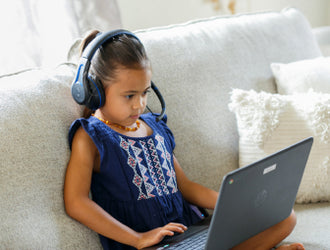
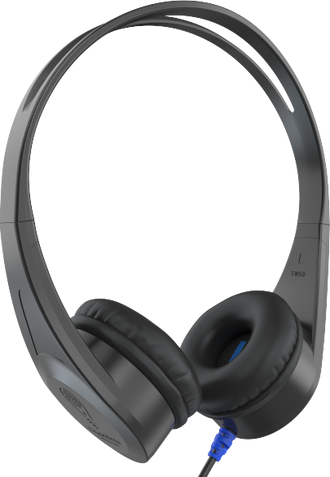
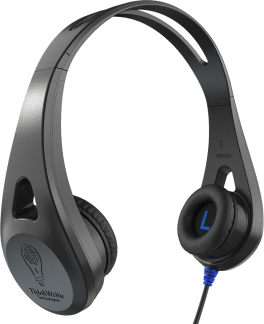
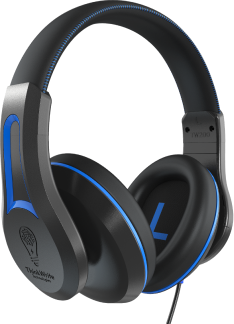
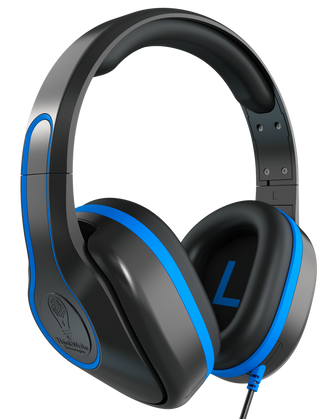
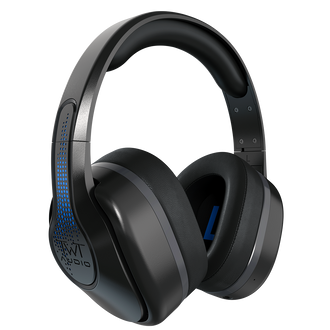
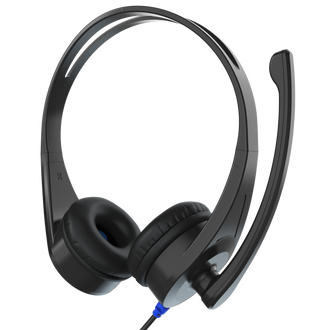
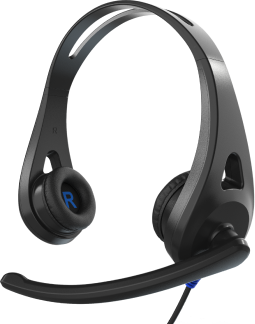
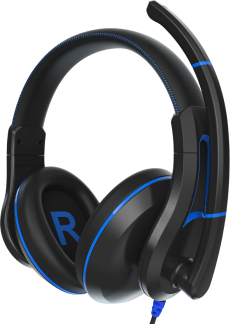
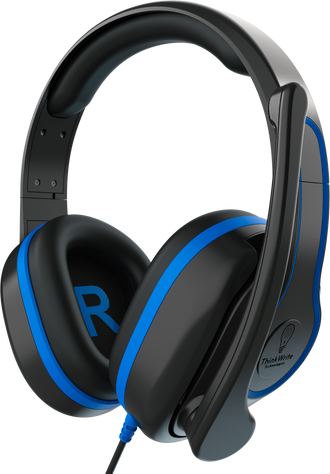
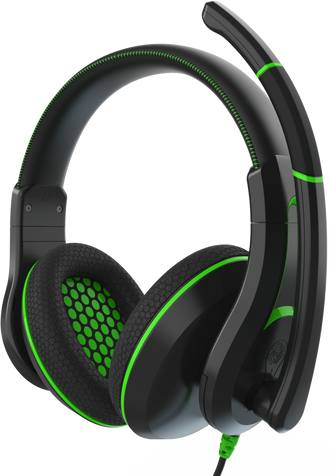
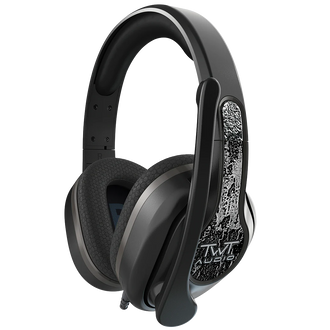
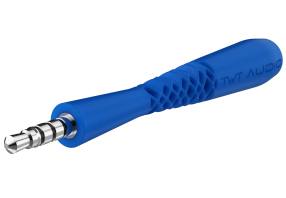
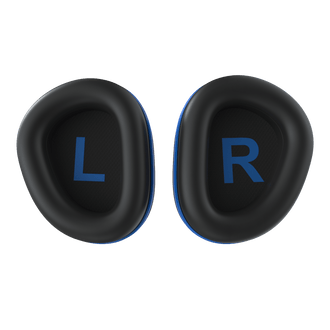
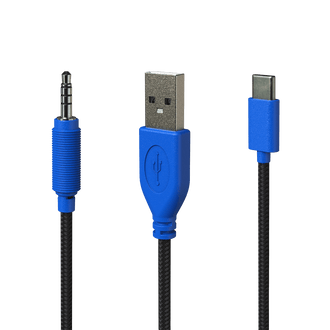
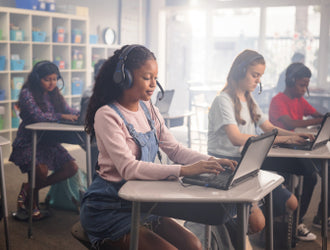
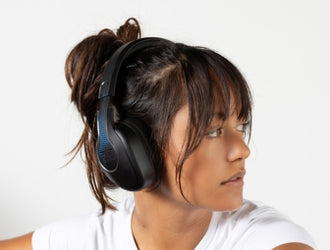
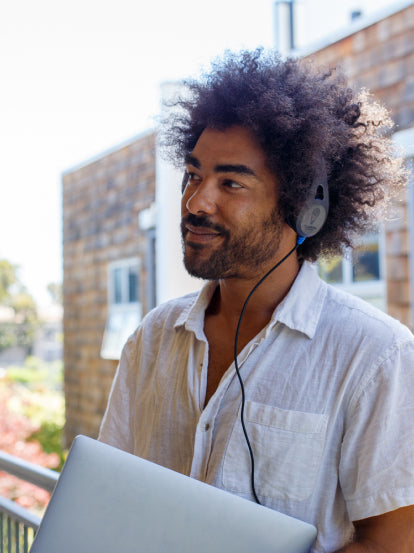
Although advancing technology can pose new problems, we can use the right technology to be part of the solution. In structured environments like testing, schools are shifting toward tools that limit unauthorized access or connectivity. It could be something as simple as a wired headphone with reliable and consistent performance across all students. Audio solutions, in particular, are evolving to support these needs. Comfortable over-ear headphones help schools manage sound, reduce distractions, and maintain standardized conditions without relying on open wireless systems. Modular cable systems solve multiple device compatibility problems while maintaining a secure, wired connection.
How To Create Secure Audio Environments
-
Replace open wireless use with wired school-issued headsets
-
Limit external connectivity to tablets/laptops during exams
-
Standardize equipment to reduce variability
Looking Ahead: Adapting To The New Normal

There is no putting a lid back on this box. Artificial Intelligence isn’t going away, and neither are advanced wireless devices. Luckily we can adapt and evolve to work with these new technologies. Make sure to check if your schools have updated or clearly communicated their AI policies and if they’re taking the steps to use tools designed for secure testing and assessment environments.
By combining thoughtful policies, practical tools, and educator insight, schools can create environments that support innovation, accessibility, and fairness all at once.
Create a Secure Environment
Explore TWT Audio solutions designed specifically for controlled testing and assessment settings. Built with reliability and consistency in mind, our headsets help minimize distractions, limit opportunities for misuse, and support a focused testing experience for every student. From durable, wired options that reduce connectivity risks to comfortable, all-day wear designs that keep students engaged, TWT Audio products are made to perform when it matters most. Whether you’re preparing for standardized testing or everyday assessments, our solutions help create a more controlled, dependable classroom environment that supports both educators and learners.

